WhatsApp Store for Home Business: How to Sell Without a Website or Delivery App
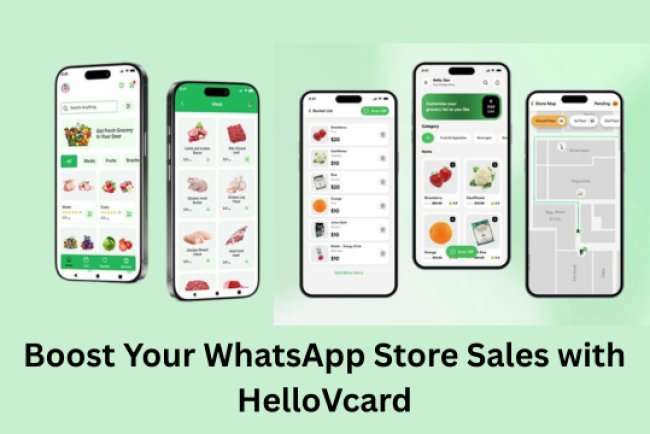
A WhatsApp Store lets home businesses list products and receive orders directly in WhatsApp — no website, no delivery platform fees, no complicated setup. This guide covers how Indian home bakers, crafters, and tutors use HelloVcard to build a professional ordering system.
Written by L K Monu Borkala | Founder, OneCity Technologies | Published: 28 May 2026 | Updated: 3 June 2026
Quick Answer: A WhatsApp Store for a home business lets you list your products, share a QR code, and receive orders directly in WhatsApp — without a website, without delivery platform commissions, and without a physical storefront. HelloVcard is the only platform that combines a digital business card with a built-in WhatsApp Store, free to start with no time limit.
Home businesses in India run on trust and convenience. Your customers know you, trust your products, and want to reorder regularly — but the ordering process is often a friction-filled WhatsApp thread of "what do you have?" messages, image forwards, and payment confusion. A HelloVcard WhatsApp Store replaces that entire thread with a browsable catalogue and a one-tap order button.
I have seen this transformation happen dozens of times. A home baker who switched from sending product images in WhatsApp to sharing a HelloVcard catalogue link reported that her average order value increased because customers could see the full menu and add items they would not have known to ask for. The catalogue does the upselling that a conversation thread cannot.
What Is a WhatsApp Store for Home Businesses?
A WhatsApp Store for a home business is a product catalogue inside your HelloVcard digital business card that customers browse via a QR code or URL and use to place WhatsApp orders. It replaces the combination of PDF price lists, image forwards, and manual note-taking that most home businesses currently use to manage orders.
The key difference from a full e-commerce store: orders are confirmed and completed through WhatsApp conversation, not an automated checkout. This is intentional for home businesses — the personal relationship and direct communication that makes home businesses trusted is preserved, while the friction of the ordering process is removed. See WhatsApp Store setup guide for configuration details.
Home Business Types That Benefit Most
Home bakeries and food businesses: list your weekly menu with prices and WhatsApp order buttons. Update it every Sunday night for the new week. Customers browse, order, and pay via UPI — all in WhatsApp. Handcraft and art: list your current pieces with descriptions, dimensions, and prices. Customers enquire and commission new pieces directly. Home tutoring: list your courses, subjects, batch timings, and fees. Parents enquire and book slots via WhatsApp without a phone call. Tailoring and alterations: list your service types with price ranges and turnaround times. Customers send measurements and fabric details in WhatsApp after the initial enquiry.
Each of these home businesses shares a common characteristic: the customer decision is based on personal trust and product quality, not brand discovery. The WhatsApp Store serves warm customers who already know you — making it the highest-converting selling tool available for home businesses. See how shops boost sales with WhatsApp Store for conversion data across business types.
Step-by-Step: WhatsApp Store for Your Home Business
Step 1: Create Your HelloVcard
Register free at hellovcard.com. Add your name, your home business name, your WhatsApp number, and a professional profile photo. Write a one-line description of what you make and who you serve. Keep it specific: "Home baker — custom cakes and cookies for Bengaluru, delivery within BTM Layout and HSR Layout" converts better than "home baker."
Step 2: Upgrade to Paid Plan and Open WhatsApp Store
The WhatsApp Store requires the paid plan at Rs.99 per month. For a home business taking even 2 direct orders per month that would otherwise go through a delivery platform at 25% commission, the Rs.99 plan cost is covered by the commission saving on the first order.
Step 3: Add Your Products
List your core products or services with names, descriptions, prices, and images where available. For a home bakery: Vanilla Sponge Cake (500g, Rs.450), Chocolate Truffle Cake (1kg, Rs.950), Cookie Box (12 pieces, Rs.320). Keep descriptions factual — weight, size, key ingredients, customisation options. Update the catalogue whenever your menu or pricing changes.
Step 4: Share Your Card in Every Customer Interaction
Share your HelloVcard URL in every WhatsApp follow-up, in your Instagram bio, in your WhatsApp status, and in any community groups where your customers are active. For a local home business, community WhatsApp groups — housing society groups, neighbourhood groups, parent groups — are your highest-value distribution channel. Post your card link once a month with a short message about your current availability. See WhatsApp status strategy for non-spammy distribution tactics.
Pricing Strategy for Home Business WhatsApp Stores
Home businesses consistently undercharge because they price based on material cost plus a modest margin rather than on value delivered. Your WhatsApp Store is an opportunity to present your pricing confidently and let customers self-select. Include your full price in the catalogue. Customers who baulk at your price were not going to convert at any price after a negotiation — filtering them early saves you the time of the conversation.
Add a minimum order value or minimum advance notice requirement to your catalogue description. "Custom cakes require 72-hour advance notice and 50% deposit" sets expectations before the enquiry arrives. You spend less time managing customer expectations and more time on the work that generates revenue. See turning your vCard into a business opportunity for pricing and conversion strategies.
Frequently Asked Questions
Can I run a WhatsApp Store without GSTIN for a home business?
HelloVcard does not require GSTIN to create a WhatsApp Store. The platform is a digital card and catalogue tool — tax registration requirements depend on your business turnover and category, which are governed by Indian tax law, not by HelloVcard.
How do I handle out-of-stock items in my WhatsApp Store?
Update your HelloVcard WhatsApp Store catalogue from the dashboard — mark items as unavailable or update the description to note current availability. All changes reflect instantly on every QR code and shared link. For seasonal home businesses, update your catalogue at the start of each availability window.
Is HelloVcard suitable for a very small home business with only 5 products?
Yes — and a focused 5-product catalogue often converts better than a sprawling one. Customers make faster decisions when the choice is limited. A home baker with 5 signature items and clear pricing generates more completed orders than one with 25 options and vague descriptions.
Regulatory Context for Home Businesses in India
Home businesses in India operate under a relatively light regulatory framework for small-scale operations. The Food Safety and Standards Authority of India (FSSAI) requires registration for home-based food businesses selling commercially — a basic FSSAI registration costs Rs.100 per year and takes under a week to obtain online. For non-food home businesses, the MSME Udyam Registration is free and provides access to government schemes and credit facilities. Neither registration requires a physical office or a commercial premises — making HelloVcard's digital-first approach directly aligned with how home businesses legally operate in India.
Scaling Your Home Business With HelloVcard
The natural growth path for a home business using HelloVcard follows a predictable sequence. Phase 1 (months 1-3): build your HelloVcard with a focused product catalogue, deploy QR on packaging and in your WhatsApp status, generate your first 50 saved contacts. Phase 2 (months 4-6): upgrade to the paid plan, expand your WhatsApp Store catalogue, begin collecting customer reviews and testimonials to add to your card bio. Phase 3 (months 7-12): use analytics data to identify your highest-converting channel, invest in that channel specifically, and consider whether a Google Business Profile listing would complement your HelloVcard for local search discovery.
Each phase requires incrementally more investment of time and money — but remains viable on a home business budget. The Rs.99/month paid plan in Phase 2 is the only mandatory cost increase in this entire growth path. Everything else scales with your revenue rather than requiring upfront investment.
Pricing Strategy for Home Business Success
Home businesses consistently undercharge because they price on cost rather than value. A home baker who prices a custom cake at material cost plus one hour of labour is pricing a commodity — not a skilled, trusted product that a customer specifically chose over a commercial bakery. Your HelloVcard WhatsApp Store is the right place to price at full value, because the catalogue context signals professionalism that justifies that value.
A useful pricing framework for home businesses: set your base price at the rate a local professional service provider of similar skill level would charge, then add a convenience premium for the direct, personal ordering experience your WhatsApp Store provides. Customers who choose a home business over a commercial alternative are specifically choosing the personal relationship and product quality — they are not comparing you to the cheapest option on Zomato. Price accordingly and you will attract customers who value what you offer rather than customers who will leave for a cheaper alternative the moment one appears.
Using Customer Testimonials in Your Home Business Card
Customer testimonials are the most effective trust signal for a home business because they represent verified third-party endorsement. Add your best testimonial — with the customer's first name and what they ordered — to your HelloVcard bio. "Best custom cake I have had in Bengaluru. Delivered on time, exactly as described. — Priya S., BTM Layout" converts new customers faster than any product description you write about yourself.
Collect testimonials systematically: after every order, message your customer 24 hours after delivery and ask "How was your experience? Would you mind sharing a quick review?" Most satisfied customers are happy to provide one when asked directly and promptly. Add new testimonials to your HelloVcard bio every month. A card with three recent, specific testimonials signals active, satisfied customers — the strongest possible trust signal for a home business where the customer cannot visit a physical store to verify legitimacy. See using your vCard for personal branding for the complete trust-building framework.
Expanding Your Home Business Reach With QR Codes
The greatest leverage point for a home business using HelloVcard is deploying the QR code beyond your own direct network. Your existing customers can distribute your QR for you if you make it easy. Include a small printed card with your HelloVcard QR in every delivery — with a short message: "If you enjoyed this, share my card with a friend." Customers who share your QR are making a personal recommendation — the highest-converting form of referral because it carries implicit personal endorsement.
Community WhatsApp groups are the second most effective channel for home business growth. Join your housing society group, neighbourhood group, and local parent group. Share your HelloVcard link once per month with a genuine, non-spammy message about what you make and your current availability. Members who have seen your products through deliveries to their neighbours are already partially warm — your group post tips them into an enquiry. For a structured approach to community-based referral growth, see digital networking for introverts and turning your vCard into a business opportunity.
Tax and Compliance for Home Businesses Using WhatsApp Ordering
Home businesses selling via WhatsApp are subject to the same tax obligations as any other business in India — GST registration is required when annual turnover exceeds Rs.20 lakh (Rs.10 lakh for certain states and service providers). Below this threshold, home businesses can operate without GST registration. UPI payments received for WhatsApp orders are trackable and should be recorded accurately for income tax purposes regardless of GST registration status.
The HelloVcard WhatsApp Store does not process payments directly — it initiates the ordering conversation, and payment is completed separately via UPI or other methods you and the customer agree on. This means HelloVcard does not generate transaction records for tax purposes — you maintain your own records through your bank statement and UPI transaction history. For food businesses, FSSAI basic registration (Rs.100/year) is required once you begin selling commercially, even from home. The FSSAI registration portal provides straightforward online registration for home food businesses. For general MSME registration, the Udyam Registration portal provides free registration that unlocks access to government schemes and credit facilities.
Growth Milestones for Home Businesses Using HelloVcard
Home businesses that use HelloVcard systematically tend to hit predictable growth milestones. Month 1 to 3: first 50 saved contacts, first 10 direct WhatsApp orders, first referral from a customer who forwarded your card. Month 4 to 6: WhatsApp Store catalogue fully built and optimised, consistent weekly status update habit established, first month with more than 30 direct orders. Month 7 to 12: 100+ saved contacts, consistent monthly revenue from direct WhatsApp orders, first month where repeat customers outnumber new customers (the sign of a healthy direct customer base).
These milestones are not guaranteed — they depend on your product quality, your distribution consistency, and your response speed. But they are achievable for home businesses that commit to the three core practices: a well-built HelloVcard catalogue, systematic QR deployment on every physical touchpoint, and a consistent weekly WhatsApp status update habit. Businesses that apply all three consistently for 6 months consistently report the milestones above. Those that apply one or two inconsistently see slower results. The system works as a system — all three elements together, applied consistently. See turning your vCard into a business opportunity for the complete growth framework.
Home Business Marketing Calendar Using HelloVcard
A simple 12-month marketing calendar for a home business using HelloVcard has four recurring activities. Weekly: one WhatsApp status update about your current products, availability, or a customer success story. Monthly: one new product or service addition to your WhatsApp Store catalogue, review of HelloVcard analytics, one community group post with your card link. Quarterly: update your HelloVcard profile photo or bio to reflect your current positioning, review and refresh your top 5 catalogue listings with improved descriptions or updated images. Annually: review your pricing against market rates and update your catalogue accordingly, evaluate whether any new distribution channels should be added (a new community group, a new social platform where your customers are active).
This calendar requires approximately 30 minutes per week of active effort — less than any other marketing approach available at comparable cost. The cumulative effect of consistent execution over 12 months is a well-known brand in your local market, a direct WhatsApp customer base of 100 to 500 people, and a catalogue that continuously converts new contacts into orders. The home businesses that achieve this outcome are not those with the best products — they are those with the most consistent execution of this simple system. See WhatsApp status strategy and creative daily vCard workflows for the detailed execution guide.
HelloVcard Free Plan vs Paid Plan: What a Home Business Actually Needs
Most home businesses can generate meaningful results from the HelloVcard free plan before upgrading to the paid plan. The free plan includes: a complete digital card with QR code, your professional profile with photo and bio, a primary CTA button (WhatsApp link, booking link, or portfolio), social media links, vCard export for phone contact saving, and analytics. This covers everything needed to build your direct customer base and receive WhatsApp enquiries from your card.
The paid plan at Rs.99/month adds the WhatsApp Store for structured product catalogue listings — the feature that converts your card from a contact tool into an ordering system. The upgrade makes sense when: you have 5 or more products or services to list, you are receiving regular "what do you offer?" WhatsApp messages (the catalogue eliminates these), and your monthly direct WhatsApp enquiries have reached a volume where a structured catalogue would meaningfully improve conversion. For most home businesses, the free plan is sufficient for the first 2 to 3 months. The paid plan becomes justified when you have proven demand and want to scale the ordering process. Start free, upgrade when the value is clear. See HelloVcard pricing for the complete feature comparison and free digital visiting card to get started today.
Set up your home business WhatsApp Store today. Create your free HelloVcard — WhatsApp Store from Rs.99/month, no commission on any order.
What's Your Reaction?