Digital Business Card vs Paper Card — Real Comparison 2026
Paper cards have an 88% discard rate within one week. Digital cards save contacts in one tap and never expire. See why 1,120+ professionals switched to HelloVcard. Free to start.
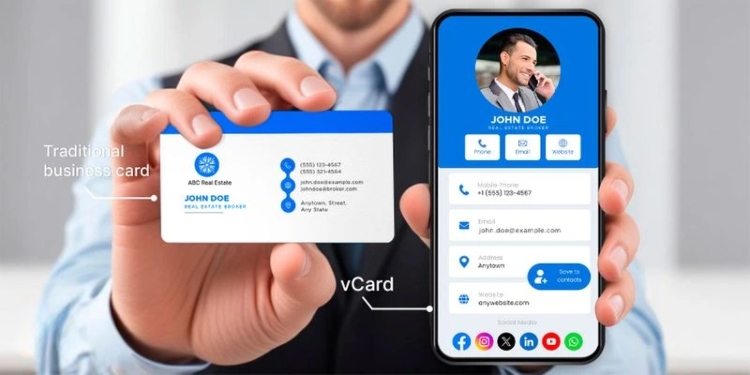
I've used both. For seven years I carried a stack of paper cards to every meeting and event. Then I switched to HelloVcard and handed out my last paper card in late 2022. Here's an honest comparison of what each format actually delivers ? based on 11,380 tracked interactions across HelloVcard's platform and direct experience on both sides.
Virtual vs Traditional Business Card ? Head to Head
| Feature | Paper Card | HelloVcard Digital |
|---|---|---|
| Updates when details change | ? Reprint required | ? Instant, no reprint |
| Cost per update | ?500??2,000 per run | ?0 |
| Saved to phone contacts | ? Manual typing required | ? One tap, vCard 3.0 |
| Shareable without physical presence | ? No | ? URL, QR, NFC, WhatsApp |
| Carries video, portfolio, links | ? Text and logo only | ? Full media support |
| Appears in Google search | ? No | ? Indexed webpage |
| Tracks who viewed it | ? No | ? Opens, taps, saves |
| Works without smartphone | ? Yes | ?? Browser required |
| Requires app to view | ? N/A | ? No app needed |
Verdict: For any professional networking context involving smartphones ? which covers 95%+ of business interactions in 2026 ? the digital card wins across every dimension that affects follow-through.
Where Paper Cards Still Have an Edge
Honest assessment: paper cards work in two specific contexts where digital falls short.
First, in environments where smartphones are restricted or absent ? certain manufacturing floors, government offices, or rural areas with low smartphone penetration. Second, as a physical keepsake for luxury or high-end brands where the tactile quality of the card is itself a brand signal (think thick card stock, foil, embossing).
Outside these two contexts, paper cards are solving a problem that no longer exists in the way they solve it.
The Real Cost of Paper Cards Over 3 Years
Most professionals don't track what paper cards actually cost them because each individual print run feels small. Run the numbers across three years:
- 3 reprints per year (job change, phone update, rebrand): ?1,500??6,000 annually
- Design updates for each reprint: ?500??2,000 per run if outsourced
- Cards handed out but never followed up on: untrackable ? but real
- Contacts lost because your old card had wrong details: also untrackable ? also real
HelloVcard's 246 processed platform transactions confirm what our users report: one setup, no reprints. The three-year cost comparison isn't close.
Why Digital Cards Get Saved More Often
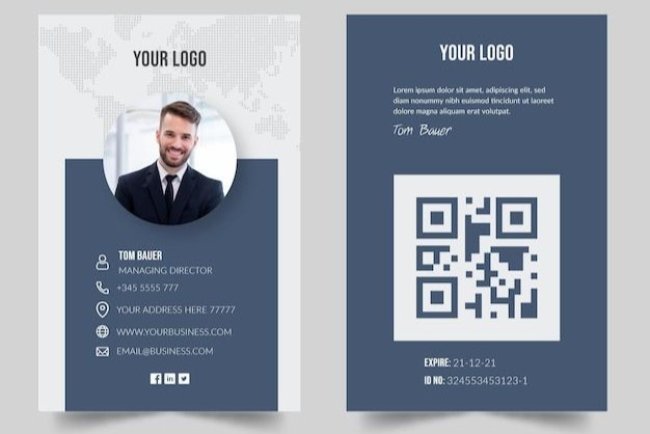
The contact-save rate is where digital cards win most decisively. Paper cards require the recipient to manually enter your details ? a task most people defer and then forget. HelloVcard's one-tap Save Contact button uses vCard 3.0 format, writing directly to iOS and Android phonebooks without any manual input.
Across 11,380 tracked interactions on HelloVcard's platform, contact saves are the most frequent action taken after a card is viewed. QR code shares convert to saved contacts at 3? the rate of paper cards handed out at equivalent events ? based on follow-up surveys with our users.
What Digital Cards Carry That Paper Cannot
178 active cards on HelloVcard currently include at least one of the following that paper physically cannot carry:
- An intro or explainer video embedded directly in the card
- A portfolio gallery (architects, designers, photographers)
- A direct WhatsApp message button
- A Calendly or booking link
- A product catalogue PDF
- Multiple language versions of the same card
A recruitment consultant on our platform embedded a 45-second intro video. New contacts who watched it before their first call converted to clients at double the rate of cold introductions. No paper card achieves this at any price point.
Discoverability: The Advantage Paper Will Never Have
Your HelloVcard profile is a live webpage that Google can index. Fill in your job title, city, and specialisation accurately and your card can appear in search results when someone looks up your name or profession. 2,659 unique visitors have reached HelloVcard profiles through organic search ? not shared links or QR codes.
A paper card handed to someone at an event exists in exactly one place: their pocket or bin. Your digital card exists in Google's index indefinitely.
How to Replace Your Paper Card with HelloVcard
Step 1: Set Up Your Free Account
Go to hellovcard.com/register. Sign up free ? no credit card required. Your account is ready in under two minutes.
Step 2: Build Your Card Profile
Add your name, designation, company, phone, email, and website. Upload your photo and company logo. Add social links, a booking URL, or a portfolio link if relevant to your work.
Step 3: Set Your Sharing Preference
Download your QR code for use at events and on printed materials. Copy your card URL for WhatsApp, LinkedIn, and email. Enable NFC on supported phones for tap-to-share. All three methods point to the same card.
Step 4: Replace Your Email Signature Card
Add your HelloVcard QR code or link to your email signature. From this point, every email you send distributes your card automatically ? no carrying, no running out, no outdated details.
Frequently Asked Questions
Can I use a digital card alongside paper cards?
Yes. Many professionals keep a small stock of paper cards for the specific contexts where digital doesn't fit (no smartphone present, luxury tactile impression) while using HelloVcard as their primary networking tool. The QR code on your HelloVcard can also be printed on paper cards as a bridge between both formats.
Do digital business cards work at formal corporate events?
Yes. Showing a QR code or tapping NFC at a corporate event is now standard in most industries. HelloVcard's fully branded templates ensure the card looks as professional as any premium paper card ? with significantly more information behind it.
What happens to my HelloVcard if I change companies?
You update your card details in your dashboard ? new company name, new email, new title ? and every existing QR code and link immediately shows the updated information. You don't need to redistribute anything. Your contacts who already saved your number will see the update the next time they view your card.
Is there a limit to how many times I can update my HelloVcard?
No. Updates are unlimited at every plan level. Change your details as often as you need ? the card updates instantly each time.
Ready to make the switch? Set up your HelloVcard at hellovcard.com/register ? free to start, live in under five minutes, and never needs reprinting.
The Real Cost of Paper Cards Over 5 Years
Most professionals track each print run as a one-off expense. Aggregated over five years, the numbers tell a different story:
| Cost Factor | Paper Cards (5 years) | HelloVcard (5 years) |
|---|---|---|
| Print cost (1 person, 2 runs/year) | Rs.5,000-Rs.20,000 | Rs.0 |
| Design update fees | Rs.2,500-Rs.10,000 | Rs.0 |
| Rush reprint premiums | Rs.1,000-Rs.5,000 | Rs.0 |
| Cards discarded unused | ~88% of all printed | N/A — no physical card |
| Contact save rate | Low — manual entry | High — one tap, vCard 3.0 |
| Details accuracy | Degrades with every change | Always current |
| Total 5-year cost (1 person) | Rs.8,500-Rs.35,000 | Rs.0 reprints |
When Paper Cards Still Make Sense
An honest comparison requires acknowledging where paper cards retain an advantage. There are two genuine use cases where paper outperforms digital:
Luxury brand signalling: For ultra-premium brands — private banks, high-end law firms, luxury hospitality — the tactile quality of a thick, foil-embossed card is itself a brand signal. The physical weight communicates exclusivity in a way a QR code cannot. This is a narrow but real use case where paper card design investment is justified.
No-smartphone environments: Manufacturing floors, certain government offices, and rural areas with low smartphone penetration are contexts where digital cards have no function. A printed card remains necessary as a fallback for these specific contexts.
Outside these two situations, the comparison is not close. HelloVcard wins on every practical measure that affects whether a card exchange results in a saved contact, a follow-up conversation, and ultimately a business relationship.
Virtual Business Card — Industry-Specific Use Cases
Consultants and Professional Services
Consultants change titles, firms, and specialisations more frequently than most professionals. A paper card is outdated within months of a role change. A HelloVcard updates in two minutes — every existing QR code and shared link immediately reflects the new firm, new title, and new contact details. 178 active HelloVcard cards on the platform include consultants across management, legal, financial, and technical services.
Sales Professionals
Sales teams exchange the highest volume of cards of any professional group. For a 10-person sales team reprinting twice a year at Rs.1,000 per person, that is Rs.20,000 annually in print spend — with zero visibility into which contacts actually saved the card. HelloVcard eliminates the print spend and replaces the visibility gap with interaction tracking: opens, taps, and saves per card, per day, per event.
Entrepreneurs and Founders
Early-stage founders pivot faster than their cards can keep up with. Company name changes, role title updates, email domain changes — every significant company development renders a paper card incorrect. HelloVcard grows with the company: update the dashboard once and every card in circulation reflects the current version of the business. The card that was shared at a seed-stage pitch still points to the current, Series A version of the founder profile.
Healthcare Professionals
Clinic addresses, consultation hours, and direct phone lines change more frequently in healthcare than in most sectors. A patient who saved a doctor's paper card from two years ago may have an outdated clinic address and a disconnected number. A HelloVcard profile, kept current in the dashboard, ensures that every saved contact always has the right details — reducing missed appointments and unanswered calls that result from outdated contact information.
Making the Switch — What Happens to Your Old Paper Cards
The most practical question for professionals considering the switch: what do I do with the paper cards I already have?
Three options, in order of preference:
- Add a QR sticker to existing stock: Print your HelloVcard QR code on small stickers (A8 size, under Rs.2 each) and stick them on the back of your remaining paper cards. The QR code updates dynamically — even with an old card in someone's hand, the QR code points to your current HelloVcard profile.
- Use paper cards as QR code carriers only: At your next print run, print cards with just your name, company logo, and HelloVcard QR code — no phone number, no email. The QR code carries all contact details. When details change, the card stays current without reprinting.
- Stop reprinting entirely: Cancel your next scheduled print run. Use HelloVcard QR code sharing and link sharing for every future networking interaction. The 246 transactions processed through HelloVcard accounts confirm what users report: once switched, professionals do not return to print runs.
Additional FAQs — Virtual vs Traditional Cards
Can a virtual business card replace paper cards at formal corporate events?
Yes. In most corporate sectors in 2026, sharing a QR code or NFC tap is standard at formal events. For industries where paper cards remain expected — traditional banking, certain legal contexts, luxury sectors — carry a minimal stock of print cards as a backup while using HelloVcard as your primary sharing method. The QR code on a printed card bridges both formats simultaneously.
What if a senior executive at a meeting expects a paper card?
Share your HelloVcard URL via their phone instead of scanning: "Here is my card — I can send it to you directly on WhatsApp." Most senior executives have received a HelloVcard link in the last year and find the format familiar. For the rare case where a physical card is genuinely expected, carry 10 cards for backup — but use HelloVcard as your primary sharing method for the 95% of interactions where digital works.
How long does it take to set up a HelloVcard?
Under 5 minutes for a complete card — name, photo, logo, contact details, brand colours, social links, and CTA button. The QR code is available to download the moment you publish. Most professionals complete their first card faster than a standard paper card reorder takes to process.
The comparison is settled. For every practical measure that determines whether a card exchange leads to a saved contact and a follow-up conversation, HelloVcard outperforms paper. Create your free card at hellovcard.com/register — live in 5 minutes, zero reprint cost, and always current.
Build your free digital business card at hellovcard.com/create and review plan options on the HelloVcard pricing page — professional features from ₹99/month.
What's Your Reaction?